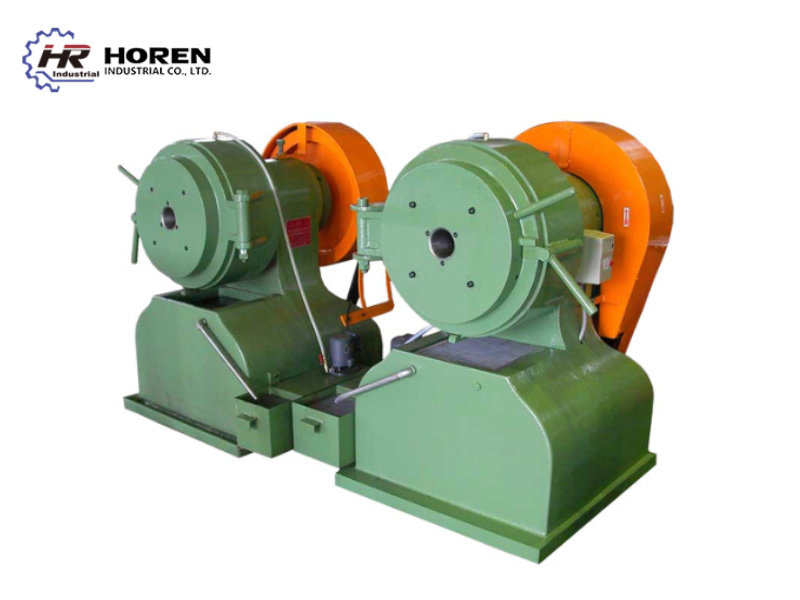
What Type of Swaging Machine Best Suits Your Pipe Forming Needs: Manual, Tube-Specific, or Fully Automatic?
In modern pipe forming processes, swaging machines are essential tools for reshaping, reducing, or tapering metal tubes with high precision—without removing material. But as production scales and complexity increase, choosing the right type of swaging machine becomes a strategic decision that directly affects quality, productivity, and cost-efficiency.
Should you opt for a manual swaging machine, a tube-specific model, or a fully automatic pipe swaging system? This article breaks down the differences and helps you evaluate which machine best fits your forming requirements.
Understanding the Three Types of Swaging Machines
1. Manual or Basic Swaging Machines
Manual swaging machines are entry-level forming systems. Operated via foot pedal, lever, or basic motor drive, they are often used for low-volume or prototype production. The dies are typically changed by hand, and parameters like forming force or diameter reduction are adjusted mechanically.
Best for:
- Small workshops
- Short production runs
- Simple round tube reduction
- Maintenance and repair operations
2. Tube-Specific Swaging Machines
Tube swaging machines are optimized for tubular parts. They often include mandrel support, multi-die configurations, and better control of wall thickness and surface finish. They are common in applications like medical tubes, brake lines, and HVAC connectors.
3. Fully Automatic Pipe Swaging Machines
Automatic systems handle loading, clamping, swaging, and ejection with minimal human input. Ideal for large-scale manufacturing, they often include CNC or PLC control, automatic lubrication, and integration-ready design.
Key Comparison Table
| Feature | Manual Swaging | Tube Swaging | Automatic Swaging |
|---|---|---|---|
| Control Type | Manual / Basic Motor | Semi-Automatic | PLC / CNC |
| Productivity | Low | Medium | High |
| Precision | Basic | Medium–High | High |
| Repeatability | Low | High | Very High |
| Material Flexibility | Limited | Tube-Specific | Broad (Steel, Titanium, etc.) |
| Best Applications | Prototyping, Repair | Medical, Automotive Tubes | Mass Production, Industrial Pipes |
How to Choose the Right Type
- Manual: Ideal for low investment, flexible prototyping, or educational use.
- Tube-Specific: Best when precision tubing is the focus and repeatability is required.
- Automatic: Optimal for long-term scalability, consistent quality, and minimal labor dependency.
conclusion
Your production goals, material types, and desired throughput will determine the right swaging machine for your needs. Whether you’re upgrading from manual forming or building a fully automated production line, aligning machine type with product complexity and scale is the key to long-term efficiency.
To explore swaging machine options tailored to your production, visit HOREN contact us for expert assistance.